Guide to Building a Balanced Plate
Building a Balanced Plate: A Simple Guide for Healthy Living
Eating healthy can seem like a chore, but it doesn't have to be. One of the easiest ways to ensure that you're getting all the nutrients your body needs is by creating a balanced plate at every meal. This guide will help you understand how to make a meal that provides all essential nutrients through healthy fats, protein, fiber, complex carbohydrates, and flavor.
The Basics of a Balanced Plate
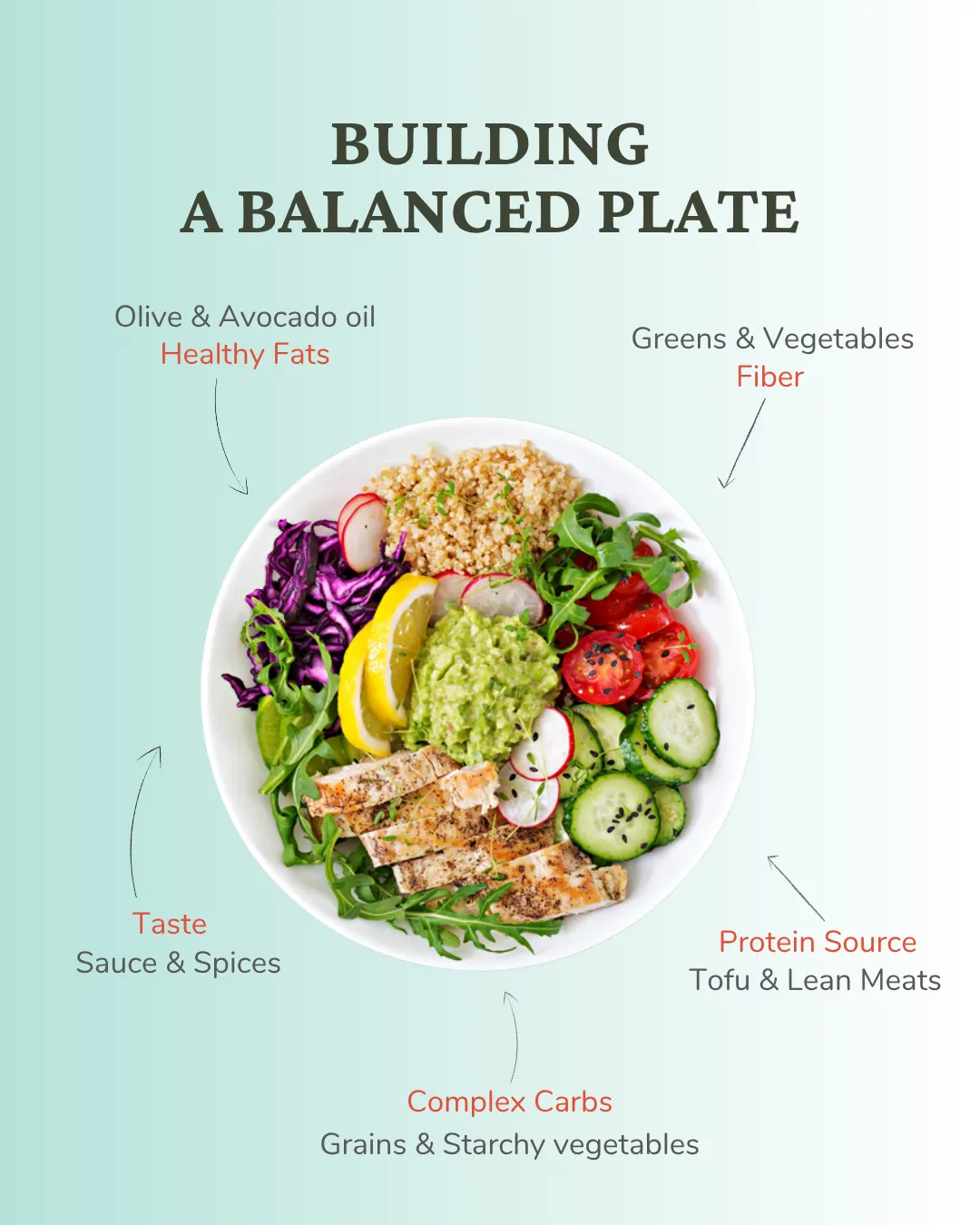
A balanced plate is not about strict rules but finding the right portions and mix of different food groups. Here’s a simple breakdown:
- Healthy Fats: Include olive oil or avocado oil. They provide essential fatty acids and help in absorbing vitamins. Look for fats that are unsaturated and good for your heart.
- Protein Source: Choose lean meats, tofu, or other plant-based proteins. Proteins are the building blocks of life, helping to repair tissues and build muscles.
- Fiber: Incorporate greens and other vegetables. Fiber is important for digestion and helps keep us full.
- Complex Carbs: Choose grains or starchy vegetables like sweet potatoes. They give you energy and are more nutritious than simple carbs.
- Taste: Use sauces and spices to make your meal enjoyable. This can include anything from lemon juice to herbs like cilantro or basil, which enhance flavor without extra calories.
Step-by-Step Guide to Building Your Plate
- Start with Proteins: Fill one-quarter of your plate with protein. Grilled chicken, fish, or plant-based options like tempeh are excellent choices.
- Add Complex Carbs: Make another quarter of your plate whole grains or starchy vegetables. Think quinoa, brown rice, or roasted potatoes.
- Pile on the Vegetables: Consume half the plate with fiber-rich foods. This can be a mix of colorful vegetables like spinach, bell peppers, and broccoli.
- Add Healthy Fats: Drizzle with olive oil, or add a serving of avocado. A small handful of nuts can also be a great addition.
- Season for Taste: Finish with your favorite spices and a bit of sauce or lemon juice. Don’t be afraid to get creative!
Why Balancing Your Plate Matters
Creating a balanced plate not only makes sure you’re getting all the nutrients you need but also aids in controlling your weight, boosting your energy levels, and improving overall health. Here's why:
- Weight Management: Eating a well-balanced plate ensures you stay full and satisfied, reducing the temptation to snack on less healthy options.
- Better Energy Levels: A mix of protein, carbs, and fats provides sustained energy throughout the day.
- Improves Digestion: High fiber content from vegetables aids in digestion and keeps your gut healthy.
- Heart Health: Incorporating healthy fats and proteins can reduce the risk of heart diseases.
Tips for Success
Here are some tips to make building balanced plates a consistent habit:
- Plan Ahead: Prepare your meals in advance to avoid last-minute unhealthy choices.
- Shop Smart: Choose a variety of colorful fruits and vegetables.
- Experiment: Try new recipes and flavors to keep meals exciting.
- Listen to Your Body: Adjust portion sizes according to your hunger cues.
Remember, eating a balanced plate is less about following strict rules and more about enjoying a variety of foods that make you feel good. Start today and experience the benefits of nourishing your body with the right balance of nutrients.
Conclusion
Building a balanced plate is an approachable way to improve your diet. By focusing on these five essential components, you’ll not only feel healthier but also enjoy your meals more. The next time you sit down to eat, think of your plate as a palette: fill it with the colors of greens, proteins, grains, and healthy fats. As you practice these principles daily, you will see how simple changes can lead to a healthier, more energetic life.